
Evolving Risk Evaluations in Shifts Between Card Games and Number-Based Wagering
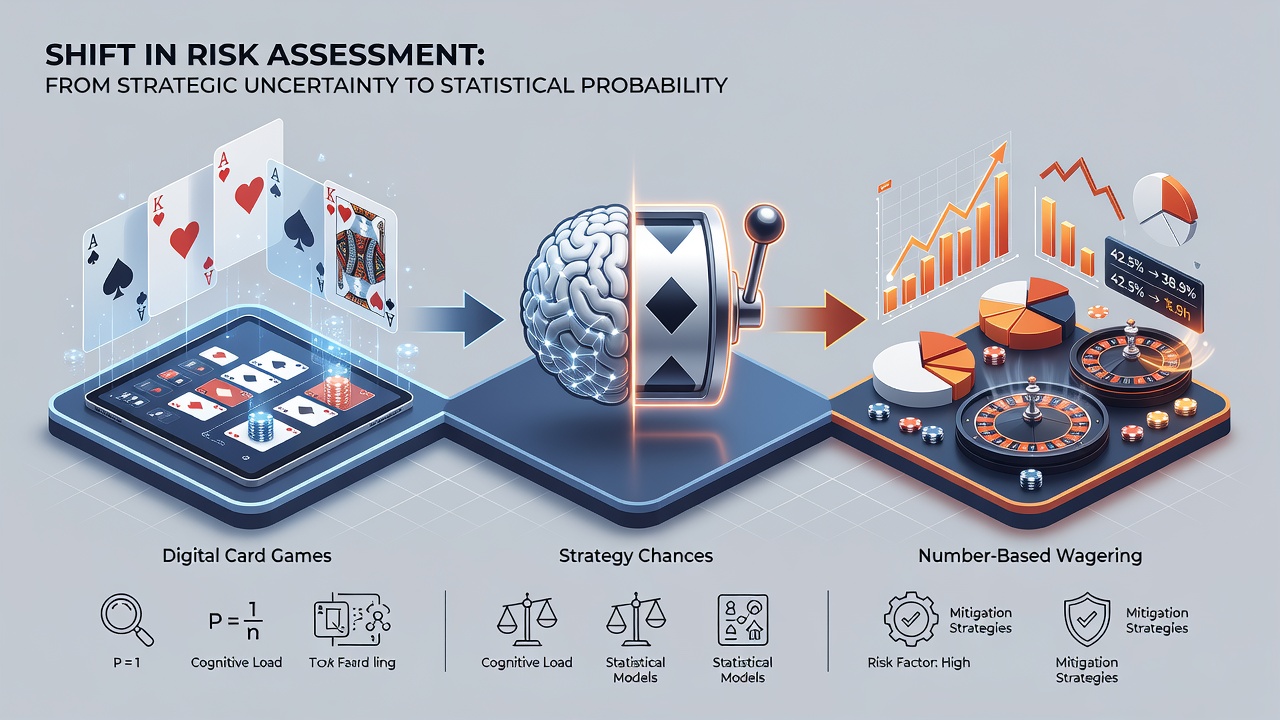
Players frequently encounter different frameworks for evaluating potential losses when they switch from digital card formats that incorporate decision points to number-driven options that rely entirely on random outcomes, and these transitions often prompt adjustments in how probabilities get weighed against session goals. Research indicates that card-based environments encourage ongoing recalculation of odds based on visible information such as remaining decks or opponent tendencies, whereas number sequences in games like roulette or keno present fixed payout structures that eliminate such variables and shift focus toward overall volatility measures.
Core Differences in Probability Handling
Digital card games allow participants to apply conditional probability at multiple stages, so risk assessment incorporates both immediate hand strength and long-term expected value derived from repeated plays, while number-based wagering presents independent trials where each result stands alone without carryover effects from prior selections. Observers note that this structural contrast leads many individuals to recalibrate their tolerance thresholds, particularly when moving into formats where skill edges disappear and house percentages remain constant across all decisions. Data from industry reports compiled in early 2026 shows participation rates in mixed-format platforms rising steadily through September of that year, with tracking metrics revealing distinct patterns in bet sizing once users cross from one category to the other.
Behavioral Patterns During Format Transitions
Those who study player logs at regulated platforms have documented several recurring sequences, including an initial period of conservative sizing when entering number-based sections after card sessions, followed by gradual increases in stake frequency as the absence of strategic feedback becomes normalized. One analysis conducted across North American and European operators found that average bet durations shortened by measurable margins when participants left card environments, because the lack of intermediate choices removed opportunities for mid-round adjustments that previously helped manage exposure. Australian research institutes tracking similar movements reported comparable adjustments in variance acceptance, noting that number sequences tend to compress decision windows and thereby alter how cumulative risk gets perceived over extended play periods.
Regulatory filings submitted to bodies such as the Nevada Gaming Control Board during mid-2026 highlighted increased scrutiny on interface designs that present both categories side by side, since seamless movement between them can blur distinctions in risk framing for less experienced participants. Figures released by the Canadian Centre on Substance Use and Addiction indicate that session data collected through September 2026 consistently showed higher standard deviation in outcomes once players entered pure-chance segments after card-based activity, suggesting the mental models carried over from skill-influenced games do not always align with the independent-trial mechanics that govern number outcomes.
Measurement Tools and Adjustment Indicators
Platform analytics teams employ several quantitative markers to detect when risk frameworks are being recalibrated, among them changes in bet-spread ratios, frequency of limit adjustments, and time spent reviewing payout tables before committing funds. Studies compiled by university-affiliated gambling research centers demonstrate that these markers shift measurably within the first three sessions after a format change, with participants often extending their exposure windows in number-based sections even when overall bankroll percentages remain steady. European monitoring agencies have published aggregated statistics showing that cross-category movement correlates with altered patterns in deposit timing, particularly among users who previously relied on card-specific probability tools that lose relevance once random number generators take over.
Industry associations tracking global trends through 2026 have also recorded variations in responsible-gambling tool activation rates, noting that prompts designed around card-game volatility sometimes receive less engagement once players enter number-driven sections where outcome independence removes familiar reference points. Such patterns suggest that risk assessment recalibration involves not only numerical reevaluation but also a reorientation toward different types of feedback loops that number sequences inherently lack.
Conclusion
Available data continues to illustrate that transitions between digital card games and number-based wagering prompt systematic revisions in how participants weigh probabilities, variance, and session parameters, with measurable effects appearing across multiple regulatory jurisdictions and research datasets collected through September 2026. Operators and oversight bodies maintain ongoing collection of these metrics to refine interface elements and disclosure practices that accompany format switches.